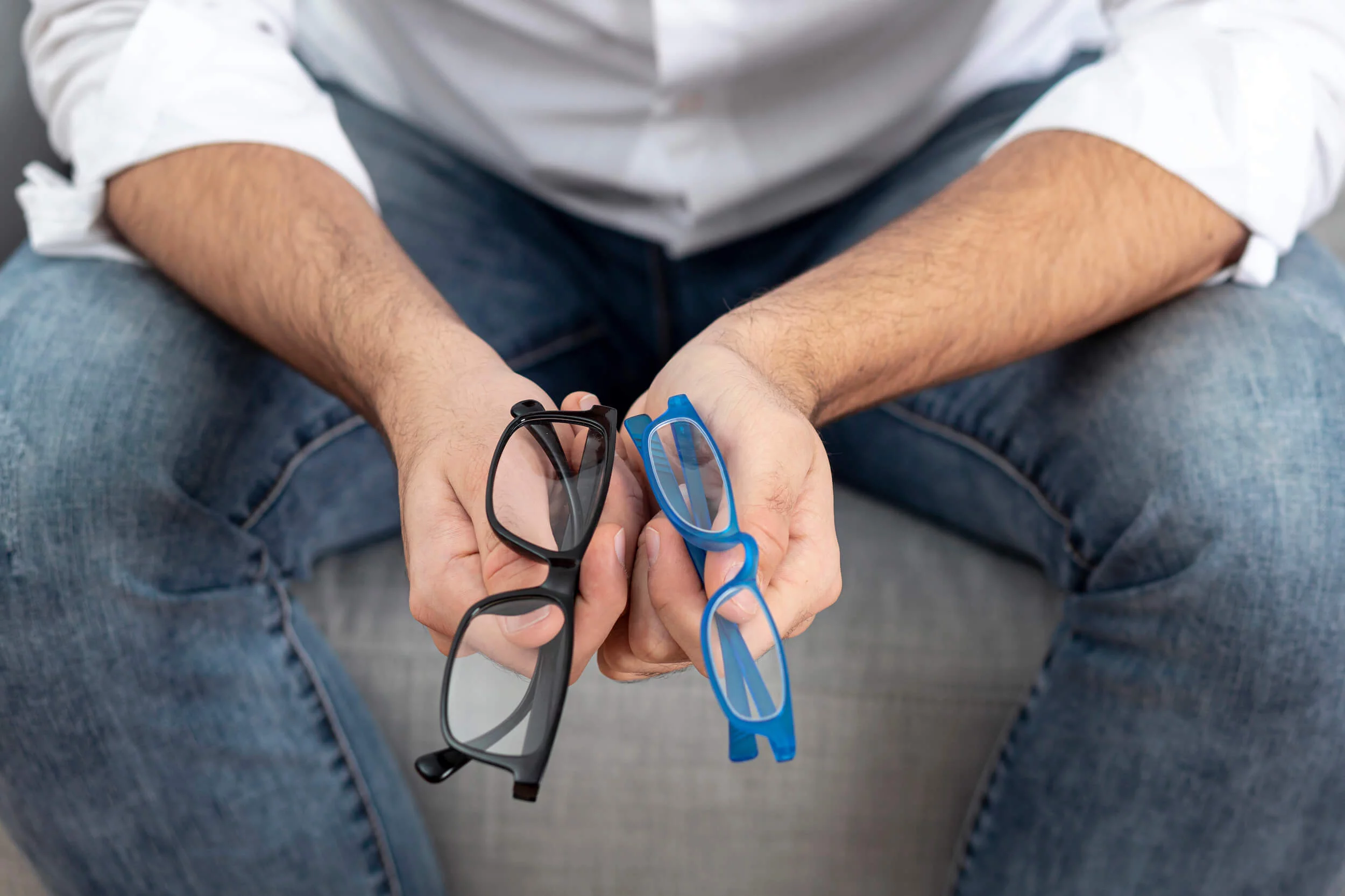
An optician is an eyewear professional who fits and adjusts eyeglasses according to a prescription from an optometrist or ophthalmologist. Opticians cannot diagnose vision conditions or write prescriptions, but they interpret prescription details, take facial measurements, and recommend frames and lenses suited to each person’s daily activities. After getting your prescription, working with an optician helps your eyeglasses fit correctly to support your vision. Here’s information on finding an appropriate pair of eyeglasses for your lifestyle and vision needs:
Get an Up-to-date Prescription
Before selecting new eyeglasses, you need a current prescription. Prescriptions are typically valid for one to two years, depending on state regulations and provider recommendations. Vision changes over time, so an older prescription may no longer reflect your current needs. Your prescription includes several values, including:
- Sphere (SPH): The SPH indicates the lens power for nearsightedness or farsightedness.
- Cylinder (CYL) and Axis: CYL and axis describe corrections needed for astigmatism.
- + (Add Value): An add value appears when additional power is needed for reading or close work.
Pupillary distance (PD), the distance between the centers of your pupils, may not appear on your prescription. Opticians measure PD to position the optical center of each lens correctly. If you plan to order glasses elsewhere, ask for both your prescription and your PD measurement. Many opticians work with eye doctors at their clinics, offering you care in one convenient location.
Discuss Your Face Shape
Opticians evaluate your face shape, facial proportions, and personal style when recommending new frames. A general guideline is to choose frames that contrast with your face shape. People with round faces often select rectangular frames, while people with square faces may prefer round or oval styles. Some common face shapes include oval, round, square, heart, and oblong.
Fit matters as much as appearance, so opticians check that the frame width matches your face and that the bridge rests evenly on your nose. The temple arms should extend over the ears without pressing against the sides of the head. Your eyes should sit near the horizontal center of each lens. Frame material affects the weight and durability of your new eyeglass frames. Acetate frames come in a range of colors and patterns, while titanium and stainless steel frames are thin, lightweight, and corrosion-resistant.
Tell your optician how you plan to wear your glasses. An office worker may have different priorities than someone who needs a durable frame for outdoor work. Share colors, brands, or styles you prefer; the optician can then narrow the selection to frames that suit your face and prescription.
Get Appropriate Lenses
Lens selection depends on your prescription, your daily activities, and your chosen frames, and opticians help you compare:
- Lens Types
- Lens Materials
- Lens Coatings
Single vision lenses have one prescription power across the entire lens, while bifocal lenses contain two distinct power zones, usually separated by a visible line. Progressive lenses provide a gradual transition between distance, intermediate, and near powers without a visible line. Computer lenses are designed for intermediate and near distances, which can suit people who spend long hours at a desk.
Standard plastic lenses are a common, economical option. Polycarbonate lenses are lighter and more impact-resistant than standard plastic, making them a better choice for children and active adults. High-index lenses are thinner and lighter for stronger prescriptions. Coatings also add specific functions to the lens surface, from scratch resistance to photochromic tints. A popular option is an anti-reflective coating that reduces reflections on the front and back of the lens.
Find Your Eyeglasses Today
After updating your prescription, visit an optician to review frame and lens options that match your needs. Choosing eyeglasses involves decisions about prescription accuracy, frame fit, lens type, and lens features. An optician can guide you through each step and adjust your frames after you receive them. To find an optician, ask your eye doctor for a referral or look online for some practitioners near you.
- Understanding Challenges in Geriatric Care and How To Address Them
- How Sclerotherapy Is an Effective Solution for Treating Spider and Varicose Veins
- Who Benefits From Ankle Replacement Surgery
- Common Questions To Ask About Cataract Surgery
- Discovering Unique Omegle Alternatives for Diverse Interactions

