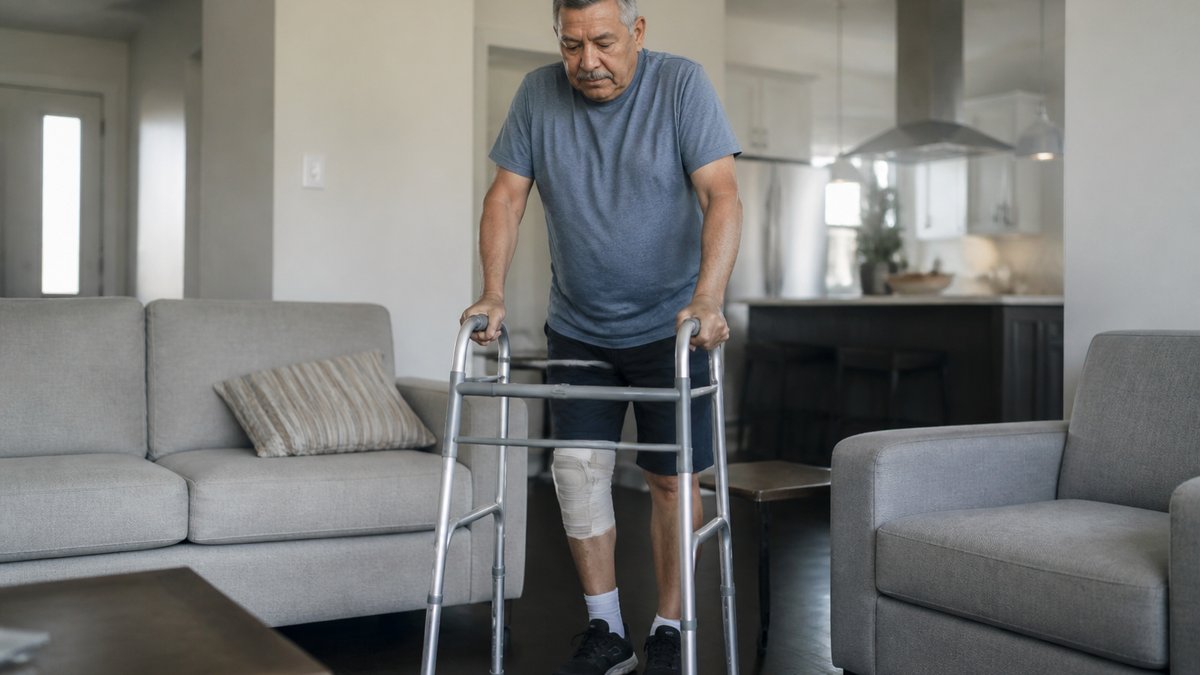
During knee replacement surgery, a doctor removes damaged parts of the knee joint and replaces them with metal and plastic parts. Arthritis and joint injuries are common reasons for the procedure. The surgery helps reduce long-term pain, and it aims to restore movement in the leg. Here are some tips for adjusting after knee replacement:
Manage Pain and Swelling
Pain and swelling are normal in the first weeks after knee replacement surgery. Take your pain medicine on the schedule your doctor sets, and do not wait until the pain becomes severe. Ice packs reduce swelling and ease soreness around the joint. When you rest, raise your leg above the level of your heart; this can relieve pressure around the surgical site. Short walks around the house also help. Gentle movement keeps fluid from building up, and it lowers your risk of blood clots, which can form after surgery. If swelling increases suddenly or your leg turns red and warm, call your doctor right away.
Use Assistive Devices
Your knee needs support while it heals. Assistive devices reduce strain on the joint, and they lower your chance of falling. Your care team will show you how to use each tool before you leave the hospital. Most people start with a walker, and they switch to a cane after a few weeks of practice. Other assistive devices include:
- Raised toilet seat: Reduces how far you need to bend your knees.
- Shower chair: Lets you sit safely while you bathe.
- Grab bars: Provide a steady hold in the bathroom and near stairs.
- Reacher tool: Helps you pick up items from the floor.
- Sock aid: Helps you put on socks without bending your knee too far.
Schedule Physical Therapy
Physical therapy is a key part of recovery. Many patients begin therapy within a day of surgery, and they continue for several weeks. A therapist creates a plan that fits your strength and goals. Sessions often focus on bending and straightening the knee and building strength in the muscles that support the joint. Regular therapy helps you return to walking, climbing stairs, and other daily activities. If you skip sessions, stiff scar tissue may form around the joint.
Your therapist will also give you exercises to do at home. Do these exercises every day, and follow the number of sets and repetitions on your plan. Some soreness is normal after exercise, but sharp pain is a sign to stop. Share your progress with your therapist, as this will help them adjust your treatment plan.
Learn More About Knee Replacement
Recovering from knee replacement surgery takes time, and following your doctor’s instructions supports healing. Managing pain and swelling, using assistive devices, and attending physical therapy all contribute to a safer recovery. Your mobility should gradually improve as the muscles around your knee become stronger, and the joint regains flexibility. Keep your follow-up appointments, as this lets your doctor monitor your progress and address any concerns. With consistent care and rehabilitation, you can return to your daily activities. Contact a joint replacement surgeon today to schedule a consultation.
- The Role of Testosterone Replacement in Treating Erectile Dysfunction
- The Long-term Benefits of Root Canal Therapy for Your Smile
- Identifying and Treating Common Warts
- Utilizing Telehealth for Accessible Chiropractic Consultations
- The Role of a Dermatologist in Managing Chronic Skin Conditions

