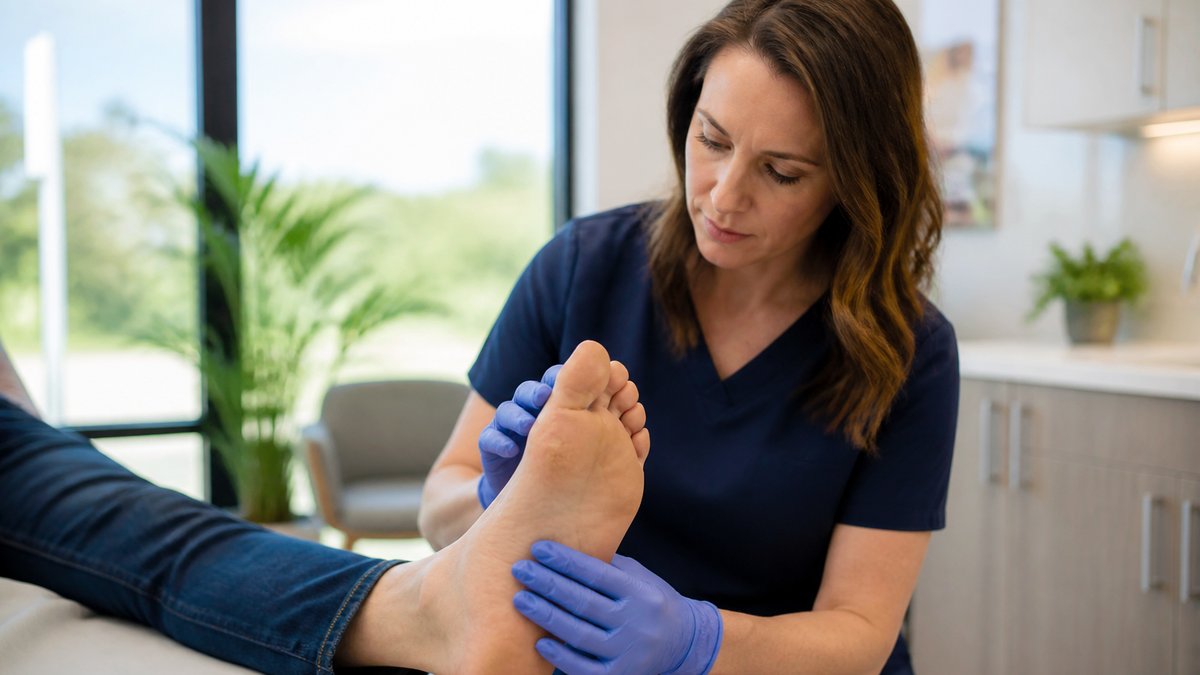
Foot and ankle specialists treat various skin and soft tissue concerns, including warts. These growths commonly appear on the soles or toes. They may feel small to the touch, yet they sometimes interfere with walking, exercise, and footwear. A specialist evaluates the lesion to confirm the diagnosis and explains treatment options based on the growth’s location and depth. Early evaluation supports targeted care; it also helps rule out other conditions that resemble warts. Here’s more information about this condition and how a specialist can treat it:
Understanding Plantar Warts
Plantar growths on the bottom of the foot usually arise from specific strains of human papillomavirus. The virus enters through small breaks in the skin, and it settles in the outer layers. These lesions often appear flat due to pressure from standing. They may also have tiny dark dots, which are caused by dried blood clots. A specialist examines the size, shape, and borders and compares them with other possible diagnoses. Some patients have a single lesion, while others develop clusters that spread across weight-bearing areas.
Reviewing Treatment Options
Once a foot and ankle specialist confirms a wart, they outline medical and procedural options that match the lesion’s features. The choice depends on depth, tenderness, and how long the wart has been present; it also reflects the patient’s overall health. Treatment plans aim to remove abnormal tissue while protecting surrounding skin and maintaining function. Options may include:
- Topical therapies: Prescription-strength agents soften thick skin and target infected cells over repeated applications.
- Cryotherapy: Controlled freezing damages the wart tissue, and the area then peels or sheds over time.
- Curettage or excision: The specialist removes the lesion under local anesthesia when conservative steps underperform.
- Adjunctive care: Padding, footwear guidance, and activity adjustments can limit pressure on sensitive areas during healing.
Working With Foot Specialists
A focused visit for warts starts with a clinical exam, and it typically includes a review of prior home treatments and changes in symptoms. The specialist may evaluate skin lines, tenderness, and any bleeding points. They also check nearby joints and gait. In some cases, the specialist may use imaging or additional tests to rule out bone or soft tissue problems beneath the lesion. This structured approach supports accurate diagnosis, and it guides the choice between topical, procedural, or combined care. Ongoing follow-up visits allow specialists to track healing and address any new lesions early.
Foot and ankle professionals aim to help patients return to activities with improved comfort and mobility. This focus supports wart treatment as part of overall foot health, not as an isolated problem. A practice that monitors gait, footwear, and skin integrity together can adjust care plans as the skin responds. This coordinated approach helps reduce interference with walking and daily tasks during and after treatment. Specialists also provide tips for preventing warts; these may include:
- Washing and drying your feet each day
- Changing your socks every day
- Avoiding touching warts
- Covering your feet in shared walking spaces
Partner With a Foot Specialist
After a wart resolves, review your hygiene routines and exposure to shared surfaces such as locker rooms. Ask a specialist how to inspect your soles and toes properly, and watch for small rough spots that resemble early warts. Early detection allows prompt treatment, which can limit the time the virus spends within the skin layers. These steps support more comfortable movement, and they help promote long-term skin health in the feet and ankles. Contact a foot and ankle specialist today to learn more about their services.
- The Role of Testosterone Replacement in Treating Erectile Dysfunction
- The Long-term Benefits of Root Canal Therapy for Your Smile
- Identifying and Treating Common Warts
- Utilizing Telehealth for Accessible Chiropractic Consultations
- The Role of a Dermatologist in Managing Chronic Skin Conditions