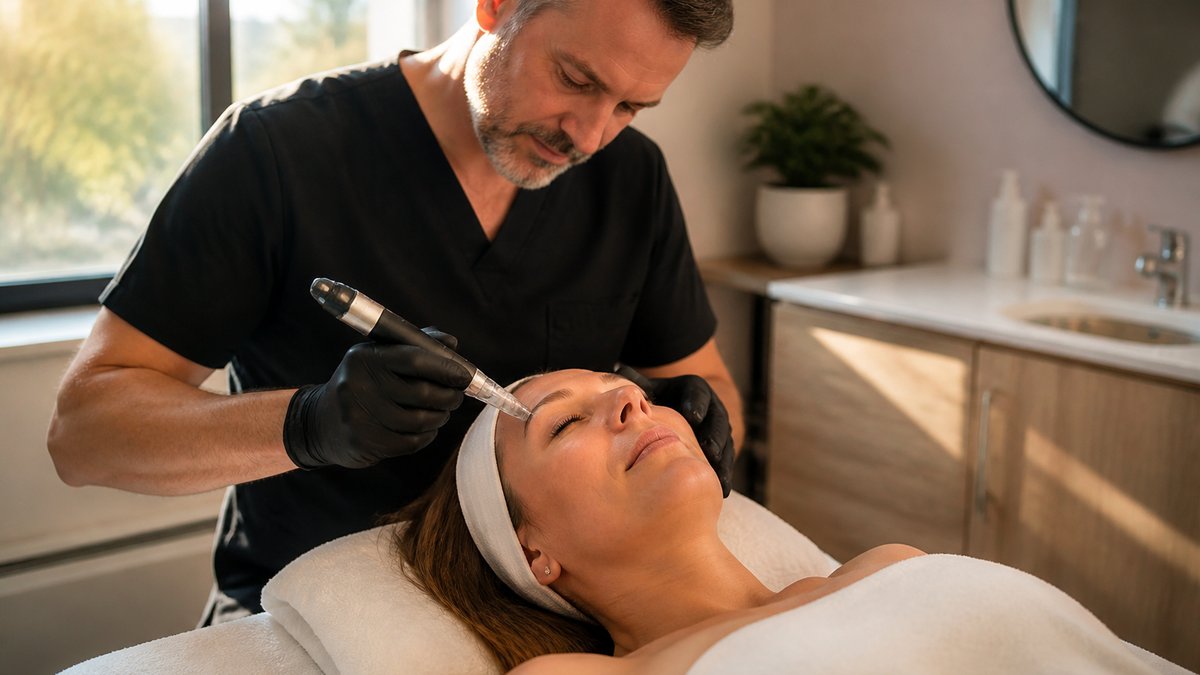
Microneedling uses a device with fine needles to create controlled micro-injuries in the skin, and this process prompts the body’s natural repair response. As the skin responds, its texture and tone gradually shift, and the surface often looks more even. Many people pair this treatment with topical products because the channels created in the skin allow those products to reach deeper layers.
What Is Microneedling?
Microneedling is a minimally invasive cosmetic procedure that relies on mechanical stimulation rather than heat or chemicals. A device passes over the treatment area; the needles move in and out of the skin at a set depth. The goal is not to damage the outer layer extensively, because the focus stays on signaling the deeper layers to renew themselves. Providers use different needle lengths for different areas, and they adjust the settings based on skin thickness and treatment goals. Shorter needles can target superficial texture and fine lines, while longer needles reach deeper structures.
What Should You Expect?
Before treatment, the provider may review your skin history, and this step helps them identify sensitivities or previous procedures that affect timing. On the day of the session, a topical numbing cream is often applied to improve comfort. The provider then begins moving the device across the skin.
During the procedure, you may feel a mild scratching sensation. The provider can adjust pressure and needle depth as they move from the cheeks to the forehead or around the mouth. Small pinpoint bleeding sometimes appears on the surface, and this response typically stops quickly as the skin begins to seal.
After treatment, the skin may look pink or slightly red, and this reaction resembles a mild sunburn. People can notice tightness or warmth after treatment. You may receive aftercare instructions that address product use and sun protection, and these guidelines support the skin as it recovers.
What Are the Benefits?
Microneedling is frequently used on the face, and some providers also treat the neck, chest, or other areas with texture concerns. People seek this procedure for fine lines, uneven tone, and superficial acne scarring; the treatment plan depends on how the skin looks at baseline. Because the method relies on the body’s own repair response, changes tend to appear gradually over several weeks.
The treatment creates a controlled environment for renewal, and this structured process often leads to smoother-feeling skin. Pores may look less noticeable as the surrounding tissue becomes more uniform. Another benefit relates to flexibility, because providers tailor needle depth and intervals between sessions. Someone with mild texture irregularities needs fewer treatments, while deeper concerns can require a series spaced several weeks apart.
Confer With a Dermatologist
A dermatologist evaluates your skin type and medical history before recommending microneedling or any alternative; this evaluation can help identify whether past conditions or recent procedures affect timing, frequency, or technique. Professional guidance shapes realistic expectations, because a dermatologist distinguishes between concerns that respond well to microneedling and those that need different interventions. With that information, you can compare options and select a treatment path that aligns with your goals and daily schedule.
- The Role of Testosterone Replacement in Treating Erectile Dysfunction
- The Long-term Benefits of Root Canal Therapy for Your Smile
- Identifying and Treating Common Warts
- Utilizing Telehealth for Accessible Chiropractic Consultations
- The Role of a Dermatologist in Managing Chronic Skin Conditions

