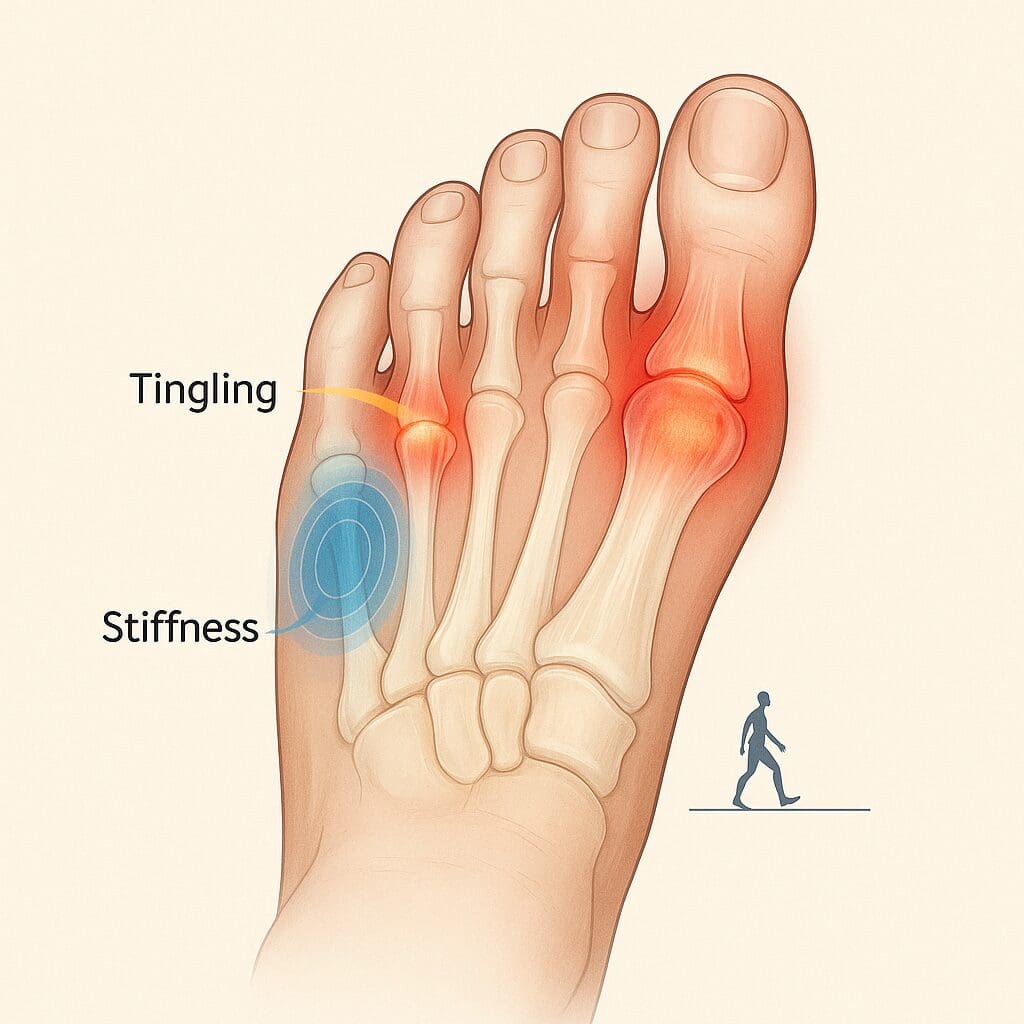
Arthritis causes joint pain, stiffness, swelling, and reduced movement that may interfere with daily activities. Symptoms and severity vary based on the type of arthritis and the joints affected. Here is a closer look at the signs of arthritis and the available treatments:
Common Signs and Symptoms
Arthritis in the lower limbs often develops gradually. Some people experience discomfort after activity, though symptoms can also appear at rest. Paying attention to these changes is key, and tracking them helps your provider create an accurate picture. Here are some common signs that adults with foot or ankle arthritis commonly experience:
- Joint pain: Aching or sharp pain in the toes, foot, or ankle that may worsen with movement.
- Stiffness: Reduced flexibility, often noticeable in the morning or after sitting for long periods.
- Swelling: Puffiness around a joint that can make shoes feel tight.
- Tenderness: Sensitivity when you press on or touch the affected area.
- Reduced movement: Difficulty bending the toes or ankle, which can change how you walk.
Medical Evaluation and Diagnosis
A thorough diagnosis begins with a conversation about your symptoms; your provider will ask when the pain began. They examine the joint, check your range of motion, and note any swelling or tenderness. This hands-on review is fundamental and often points to the type of arthritis involved.
Imaging tools add detail to the diagnostic process; X-rays remain a common first step. These scans show joint spacing, bone changes, and alignment, and they help confirm the pattern of wear. Your provider may request blood tests to rule out other conditions.
Nonsurgical Treatment Options
People often start with nonsurgical care for arthritis, which aims to reduce pain and protect movement. Your provider will tailor the approach to your joints, your activity level, and your goals. Changes often deliver noticeable results, though the timeline varies from person to person.
Lifestyle Adjustments and Support Devices
Daily changes can ease pressure on your joints, and they support long-term comfort. Supportive footwear cushions each step, while custom orthotics redistribute weight across the foot. Braces and shoe inserts add stability, and they can reduce strain during walking. Weight management also reduces the load on your feet and may slow the progression of joint wear.
Medication and Physical Therapy
Your provider may recommend medication, such as topical creams and oral tablets, to manage pain and swelling. Physical therapy strengthens the muscles around the joint, and it improves flexibility over time. A therapist guides you through targeted exercises and adjusts the routine as you progress.
Surgical Treatment Options
Surgery becomes a topic when nonsurgical methods no longer control your symptoms. Your provider will contemplate this approach only after reviewing your daily limitations and imaging results. Several procedures exist, and the right choice depends on which joint is affected and how far the damage has progressed.
A surgeon explains the goals and recovery expectations, and this discussion helps you make an informed decision. Some procedures remove inflamed tissue or bone spurs, targeting specific problem areas. Recovery timelines vary by procedure, and your care team will outline what to expect at each stage.
Schedule Your Arthritis Evaluation Today
Arthritis in the feet, toes, and ankles produces clear signs, and early attention can make a difference. A structured evaluation identifies the type of arthritis, and it guides you toward the right combination of care. Nonsurgical options such as supportive devices, medication, and physical therapy help some people, while surgical procedures address advanced cases. Contact a qualified arthritis near you to schedule your arthritis evaluation today.
- Innovative Vein Treatment Techniques Revolutionizing Care
- The Potential Benefits of Stem Cell Therapy for Joint Pain Relief
- The Hyperbaric Chamber Treatment Process
- How Orthopedic Surgeons Approach Joint Pain Diagnosis
- Common Causes and Treatments for Erectile Dysfunction