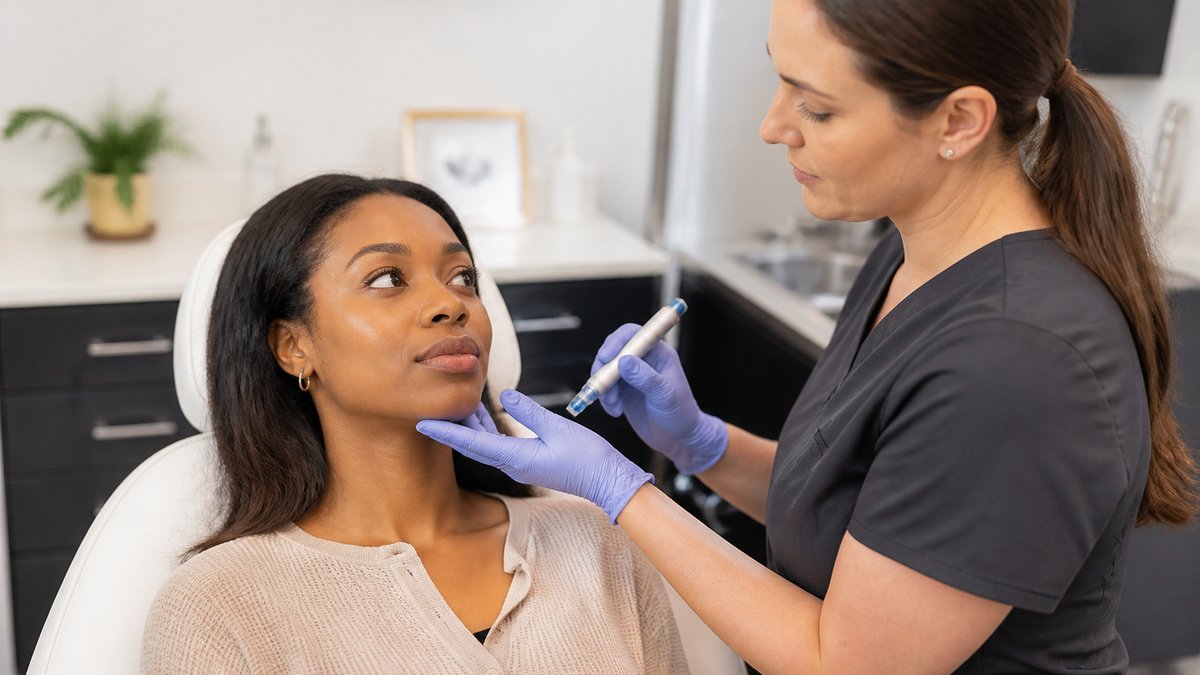
Microneedling uses fine needles to create controlled micro-injuries in the skin’s surface. The technique is designed to prompt the body’s natural response to these tiny channels, and the device can be adjusted to different depths depending on the area treated. Because the approach relies on the skin’s existing repair mechanisms, it appeals to individuals who want a non-surgical option for addressing texture and tone.
What Is Microneedling?
Microneedling is a cosmetic procedure that uses a handheld device equipped with small needles. As the device moves, it creates numerous micro-channels. Microneedling treats the skin barrier, and outcomes can vary based on the intensity of the session.
What Is It Used For?
People may pursue microneedling when they want to improve the look of uneven texture, and the technique is used on both the face and selected body areas. Common concerns include the appearance of fine lines and mild surface irregularities. Because the process targets the skin’s surface rather than deeper structures, it has a different role than surgical procedures. Some individuals use it as part of a broader skincare plan.
Microneedling is sometimes combined with other non-surgical treatments in a planned sequence. Some offices pair it with topical serums that are applied during the session, while others may space it between different procedures such as peels or light-based therapies. This structured approach helps maintain the skin barrier, and it allows individuals to work toward long-term texture and tone goals.
What Does It Involve?
A typical microneedling appointment begins with cleansing the treatment area, and a topical numbing cream can be applied. Once the skin is prepared, the practitioner adjusts the device settings and moves it across the surface. The session length depends on the size of the area and on whether multiple regions are treated together.
After the procedure, the skin may feel warm and tight. Direct sun exposure is often limited while redness is present, and broad-spectrum sunscreen can become a part of the routine. Makeup use may be delayed for a short period. This timing can be tailored to how the skin looks and feels.
Treatment plans may be spaced several weeks apart to give the skin time to respond. Some individuals complete an initial series, and then they can schedule periodic maintenance sessions based on their goals and how their skin changes over time. Because lifestyle factors such as sun exposure, skincare habits, and general health influence the skin’s appearance, these aspects may be part of the conversation when exploring this treatment with a professional provider. Microneedling is one tool among many, and it can work best when integrated into a consistent routine.
Confer With a Dermatologist
Anyone thinking about microneedling benefits from a direct conversation with a dermatologist who understands their skin history and goals. A dermatologist can review current medications, existing skin conditions, and previous procedures, and they use this information to outline realistic expectations. This discussion also covers which areas to treat, as well as how many sessions may be useful and what type of aftercare aligns with the person’s specific situation.
- The Role of Testosterone Replacement in Treating Erectile Dysfunction
- The Long-term Benefits of Root Canal Therapy for Your Smile
- Identifying and Treating Common Warts
- Utilizing Telehealth for Accessible Chiropractic Consultations
- The Role of a Dermatologist in Managing Chronic Skin Conditions

